

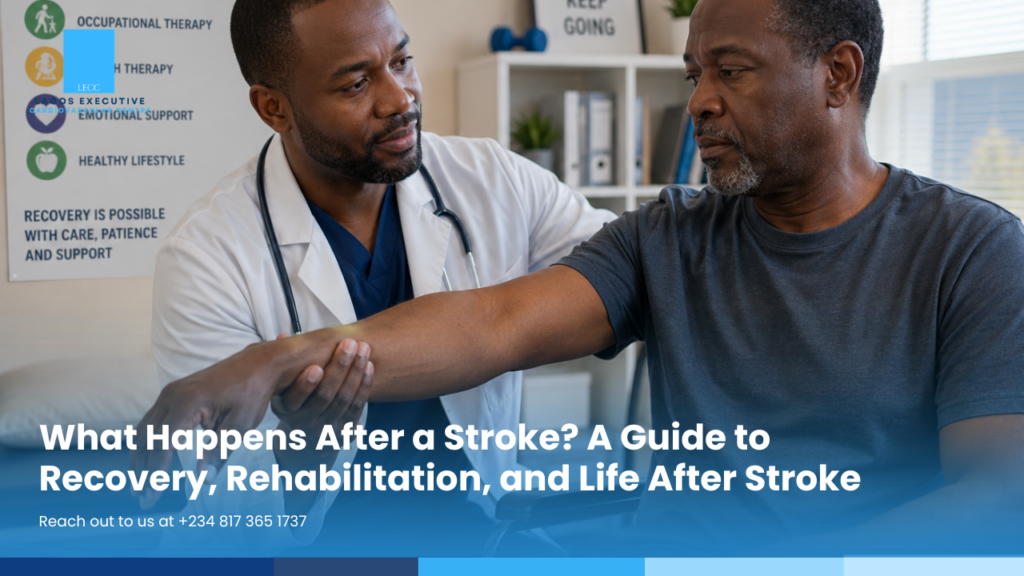
For many people, surviving a stroke feels like the hardest part of the journey. In reality, recovery begins the moment the emergency is over. A stroke can affect movement, speech, memory, swallowing, vision, and even emotions. Some people regain their independence within weeks, while others require months of rehabilitation. Every stroke is different, which is why every recovery plan should be tailored to the individual.
The good news is that with early rehabilitation, specialist care, and family support, many stroke survivors make remarkable progress and return to meaningful, active lives. At the Stroke Clinic at Lagos Executive Cardiovascular Centre (LECC), our multidisciplinary team supports patients through every stage of stroke recovery, helping them regain function, reduce complications, and lower the risk of another stroke.
The First Few Weeks After a Stroke
The days and weeks following a stroke are critical. During this period, your healthcare team monitors your recovery, manages underlying conditions such as high blood pressure or diabetes, and begins rehabilitation as soon as it is safe to do so. Recovery often starts earlier than many people expect. Even simple exercises and speech therapy introduced in the hospital can make a significant difference over time.
Stroke Recovery Looks Different for Everyone
Some patients recover almost completely, while others need ongoing rehabilitation.
Recovery depends on several factors, including:
- The type of stroke
- The area of the brain affected
- How quickly treatment was received
- The patient’s age and overall health
- Commitment to rehabilitation
Progress may sometimes feel slow, but small improvements often add up over time.
Rehabilitation Is More Than Physical Therapy
Many people think rehabilitation simply means learning to walk again. In reality, stroke rehabilitation focuses on helping patients regain as much independence as possible. Depending on individual needs, rehabilitation may include:
- Physiotherapy to improve strength, balance, and mobility
- Speech and language therapy for communication or swallowing difficulties
- Occupational therapy to help patients perform everyday activities
- Nutritional counselling
- Medical management of stroke risk factors
- Emotional and psychological support
The earlier rehabilitation begins, the greater the opportunity for recovery.
Preventing Another Stroke
Experiencing one stroke increases the risk of having another. This is why follow-up care is just as important as emergency treatment. Your doctor may recommend:
- Regular blood pressure monitoring
- Cholesterol management
- Diabetes control
- Blood-thinning medications where appropriate
- Lifestyle changes such as healthier eating and regular exercise
- Routine follow-up appointments
Managing these risk factors can significantly reduce the likelihood of another stroke.
The Importance of Family Support
Stroke recovery is rarely a journey taken alone. Family members and caregivers play an essential role by encouraging rehabilitation exercises, supporting medication adherence, attending follow-up appointments, and providing emotional encouragement during recovery. Patience and consistent support can make a meaningful difference in a survivor’s confidence and progress.
Frequently Asked Questions
- How long does stroke recovery take? Recovery varies from person to person. Some patients improve within weeks, while others continue making progress over several months or even years.
- Can someone fully recover after a stroke? Many people recover well after a stroke, particularly when treatment and rehabilitation begin early. The extent of recovery depends on the severity of the stroke and the individual’s overall health.
- Why is rehabilitation so important? Rehabilitation helps patients regain strength, improve mobility, restore communication skills, and become as independent as possible.
- Can another stroke be prevented? Although not every stroke can be prevented, controlling blood pressure, diabetes, cholesterol, and other risk factors greatly reduces the chance of another stroke.
Recovery Doesn’t End When You Leave the Hospital
Life after a stroke comes with challenges, but it also comes with opportunities for recovery. With specialist care, structured rehabilitation, and ongoing support, many stroke survivors continue to regain independence and improve their quality of life.
At the Stroke Clinic at Lagos Executive Cardiovascular Centre (LECC), we provide comprehensive stroke care, from emergency management to rehabilitation and long-term prevention. Our multidisciplinary team is committed to helping every patient achieve the best possible recovery.
Book a Stroke Clinic Consultation
Whether you are recovering from a recent stroke or supporting a loved one on their recovery journey, our team is here to help. Visit the Stroke Clinic at Lagos Executive Cardiovascular Centre (LECC) and the Neurology Clinic with Dr Alagbe for expert post-stroke care, neurological follow-up, and rehabilitation.
📞 Call: +234 817 365 1737
🌐 Website: https://thelecc.com
📩 Contact Us: https://thelecc.com/contact-us/
📞 Call: +234 817 365 1737
🌐 Website: https://thelecc.com